I was queuing up for my crepe avec nutella et banane in the latin quarter in Paris when I received the awful news from Baringa.
“Hi Nayef. My mum passed away peacefully this morning.”
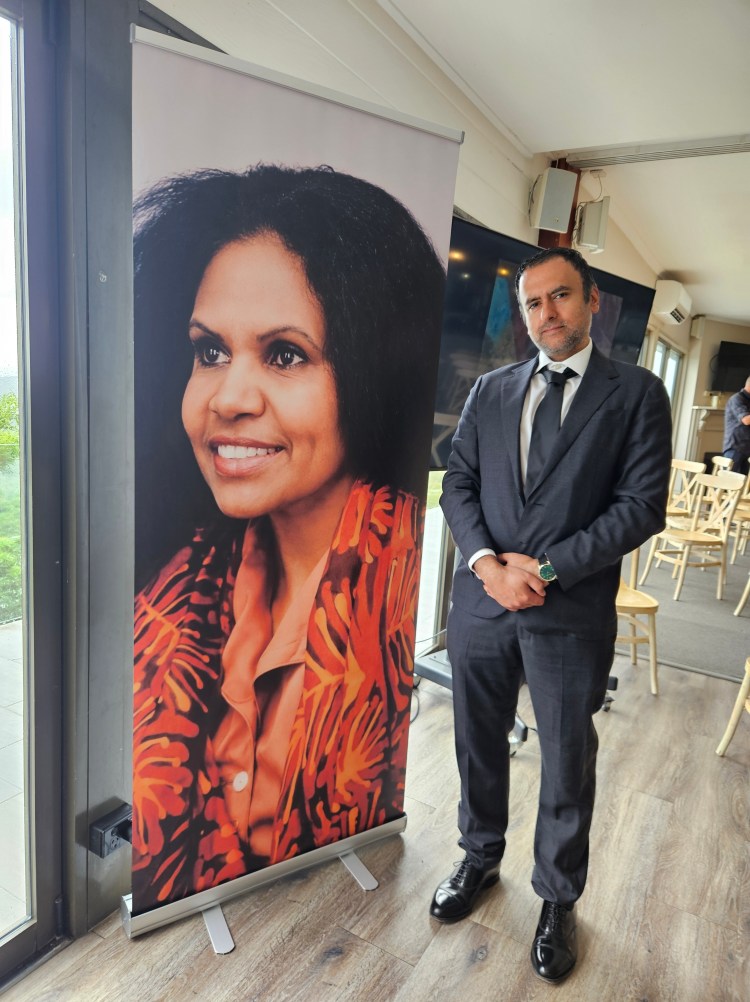
So many memories returned to me that day. At my favourite Place de la Sorbonne, I sat down and reflected on the kindness that Aunty Maroochy Barambah had bestowed upon me over the last nine years.
I first met Aunty Maroochy at EY.
“I am Maroochy Barambah. I am descended from the Duke of York,” she introduced herself.
“Oh, you mean Dakki Yakka?” I replied.
“Oh!! You know,” she said with a mixture of surprise and dare I say it esteem. She wouldn’t have imagined that a British immigrant of Pakistani heritage would know the real name of her ancestor. Very few people outside the Aboriginal community would know who the local “Duke of York” was.
I told Aunty Maroochy that my passion was history. That I loved to imagine what life would have been like in the past and that I was writing a novel that explored Turrbal life before Europeans invaded. Over the course of the next few years, we would regularly meet for coffee/lunch/dinner and she would guide me along the knowledge pathway.
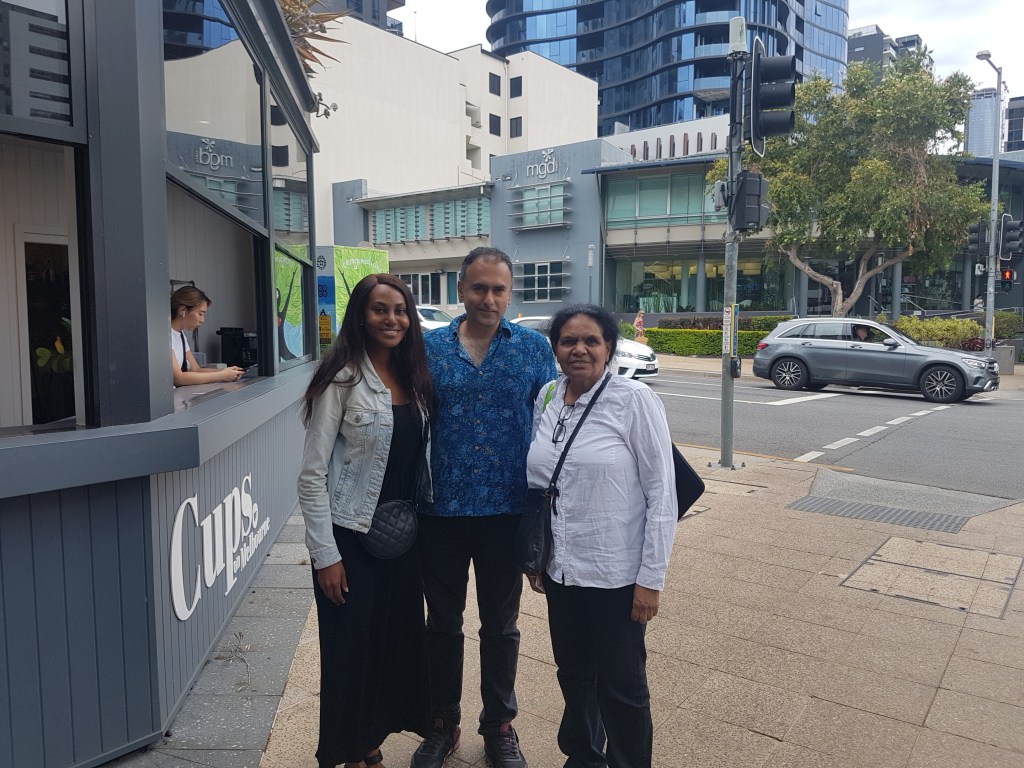
She would correct the errors I was making. She would advise me on certain matters. She loved the story and particularly that it rejoiced in local culture. She gave me the blessing to use Turrubul and Gubbi Gubbi language in the novel. When I was close to finishing The Last Gundir, she advised me that if I received any divisive comment from the Aboriginal community then I was to firstly not get offended and secondly not to respond to them. Because I had no visibility on the issues within the Aboriginal community itself and with the outside world. Very wise words of advice although to be fair, very few Aboriginal people have come forth with divisive comments or demands for a share of the income. I should clarify that all of the Aboriginal knowledge in my novels has come from publicly available information. The tribal boundaries in my novels come from two published sources (Petrie and Steele) and I do not claim authority on them.
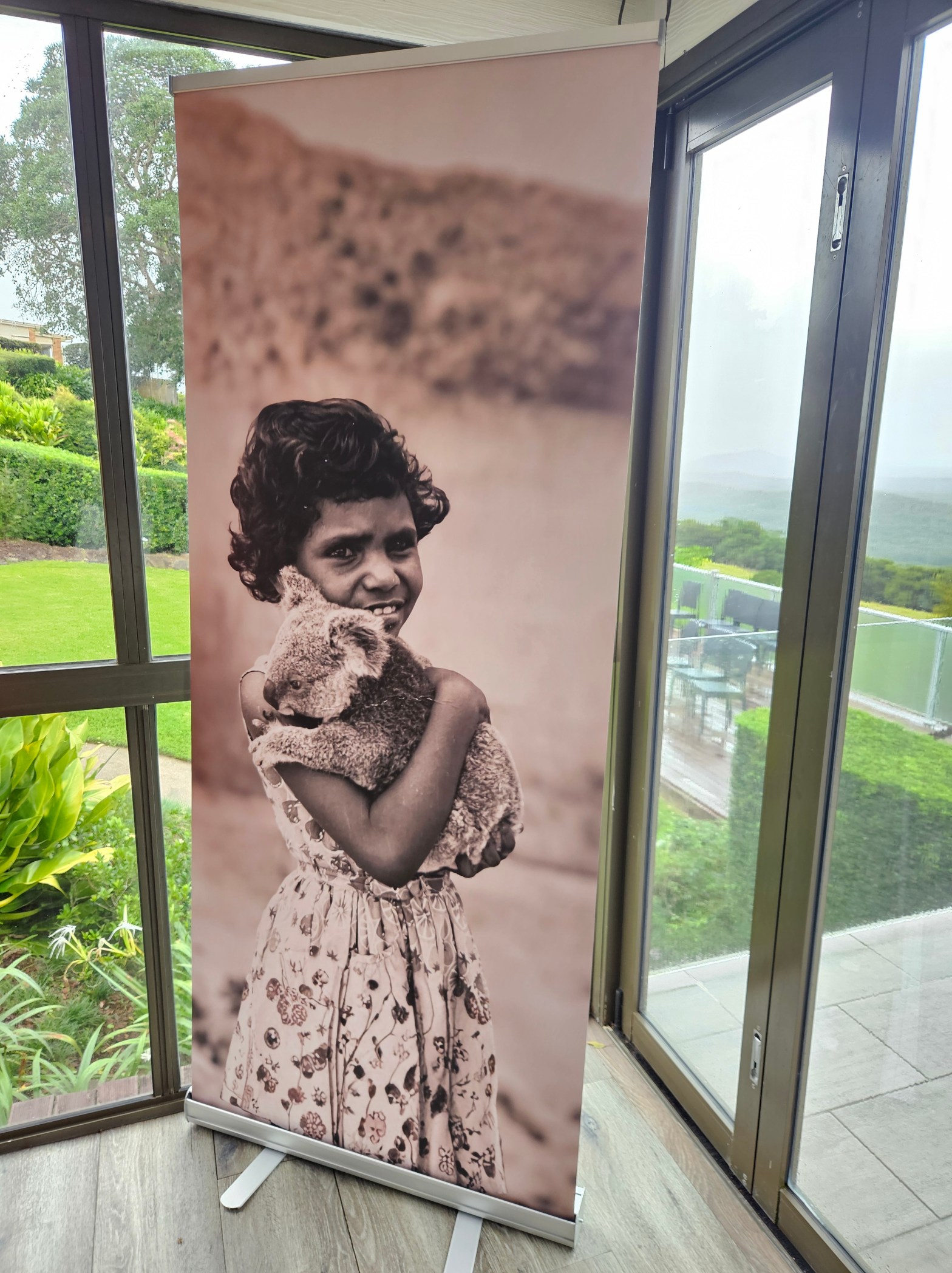
Aunty Maroochy was born in the Barambah Aboriginal Reserve in Cherbourg (about 3 hours drive north of Brisbane). If you’ve not been, I strongly urge you to spend a morning or afternoon at the Ration Shed Museum in Cherbourg. It is a most fascinating place to learn about recent history. They are open and very welcoming to visitors. My next blog will likely be about a lad from this government-run settlement that managed to bowl Don Bradman (yes, the best batsman in the history of cricket) for a duck. You read that right. 5 balls. 0 runs. Quack quack.
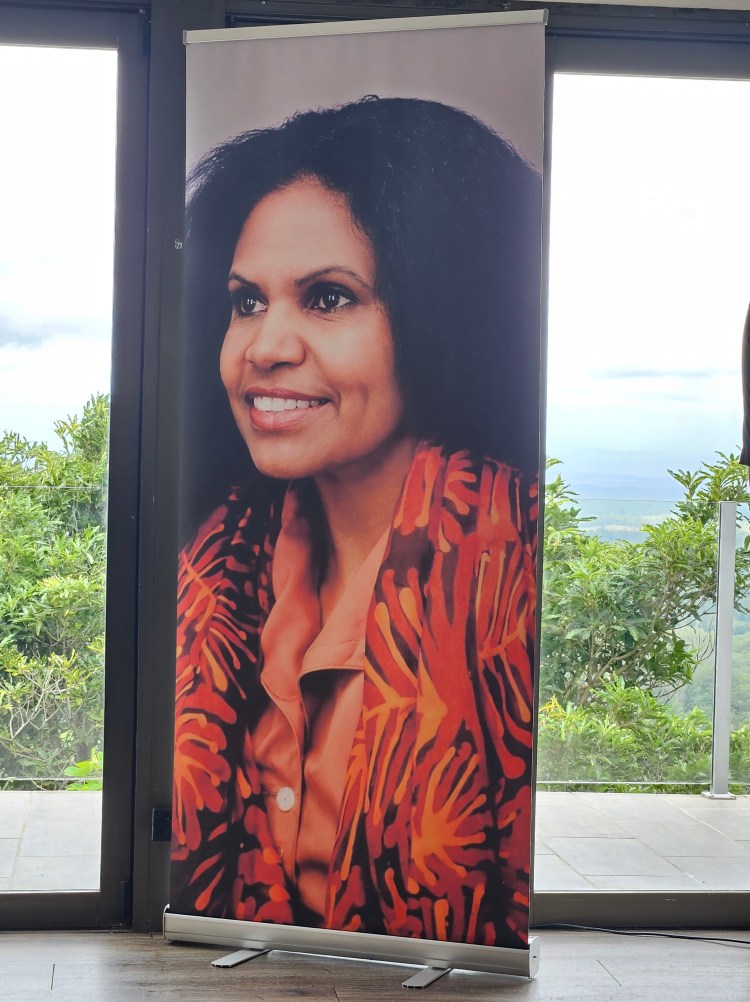
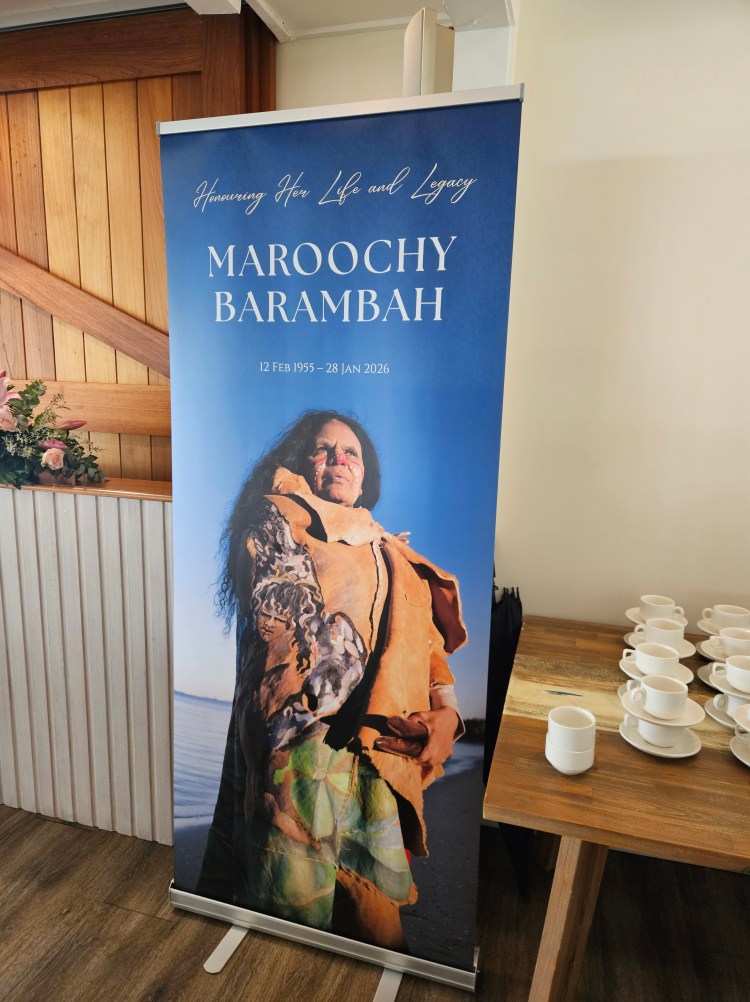
Anyway, I digress. Aunty Maroochy was not only a powerful Law-Woman of the Turrbal people. She was also Australia’s first Aboriginal opera singer and the first Aboriginal person to perform an opera at the Sydney Opera House. Her musical career also spanned jazz, rock and theatre. She’s appeared in the opera (and later film adaptation) Black River, the opera Beach Dreaming, a 1980s television series Women of the Sun and a musical Bran Nue Dae. She’s sung the national anthem in her native Turrubul language and performed many a Welcome to Country in Brisbane, home of the Turrbal people. She was a trailblazer by any other name. Her actions and deeds in a difficult world around her have allowed Indigenous people today to find their feet a little easier.
One of my favourite memories of Aunty Maroochy came in 2020 when I was preparing to send the manuscript to a local publisher (UQP) for their consideration. I sent an e-mail to UQP outlining the novel’s merits. The first novel that doesn’t view Aboriginal culture through the lens of tragedy (as Indigenous authors would write about) and doesn’t view Aboriginal culture through the patronising “noble savage” trope (as white authors would write about). I am neither Aboriginal nor white. I am someone who loves learning about the past and who had written a novel that didn’t seem to exist anywhere in Australia. In my e-mail, I explained that Aunty Maroochy Barambah had been guiding me for the past few years and wanted to see the novel out there.
At 9am, I received a reply from the lady who worked at UQP. “It sounds like you’re not Aboriginal so we will likely not look at your manuscript.”
My world caved in. I genuinely thought UQP was the only avenue I had to get my novel out there. It was a local publisher who should have snapped this from my hands. A well-researched novel with maps that bring to life the highly evolved spiritual world that existed in the Brisbane region. But, UQP had an issue with the colour of my skin –something I could not and would never change about myself. “We will likely not look at your manuscript.”
For 2 hours, I was utterly dejected. I had given 2 years of my life to a project that would never succeed because of racial discrimination in today’s world. A manuscript was discriminated against because of the colour of the skin of its author. I actually went to brush off my CV and look for my next role in my career. The novel was dead and buried.
At 11am, out of the blue, my phone buzzed. A text message. From Aunty Maroochy.
“Hi Nayef. For your submission to publishers, I will write you a letter of support.”
What the heck. What the absolute heck was going on. How could she have known? I hadn’t told her I was contacting publishers let alone that I had been rejected by the one publisher that should have seized it. Was it divine intervention after two hours of depression? She really could not have known of the rejection and dejection I was going through.
Aunty Maroochy wrote a wonderful letter of support (which I have included at the beginning of Wrong Side). When I next met her, I asked how did she know to contact me at that moment? When in my heart, I had given up after two hours of heavyheartedness, how did she know to reach out to me then? She didn’t reply. She only smiled at me. And I recall that for a moment, I actually got scared. She had once remarked to me that in her bloodline, there was a gundir (Aboriginal sorcerer). I hadn’t really thought about it then. But now, my skin was in goosebumps with the realisation of who had been guiding me all these years.
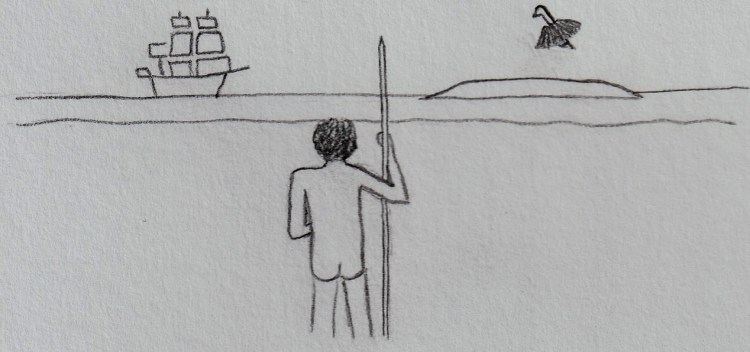
Now, that letter of support still didn’t work. UQP were still not interested and wouldn’t budge from their stance of racial discrimination. But by then, I no longer cared. If Aunty Maroochy wanted to see this novel out there, then come Hell or high water, I would get it out there. And so I designed the front cover myself (I’m not a graphic artist as can be seen by the basic hand drawn sketches of an Aboriginal boy and a ship on the cover of The Last Gundir).
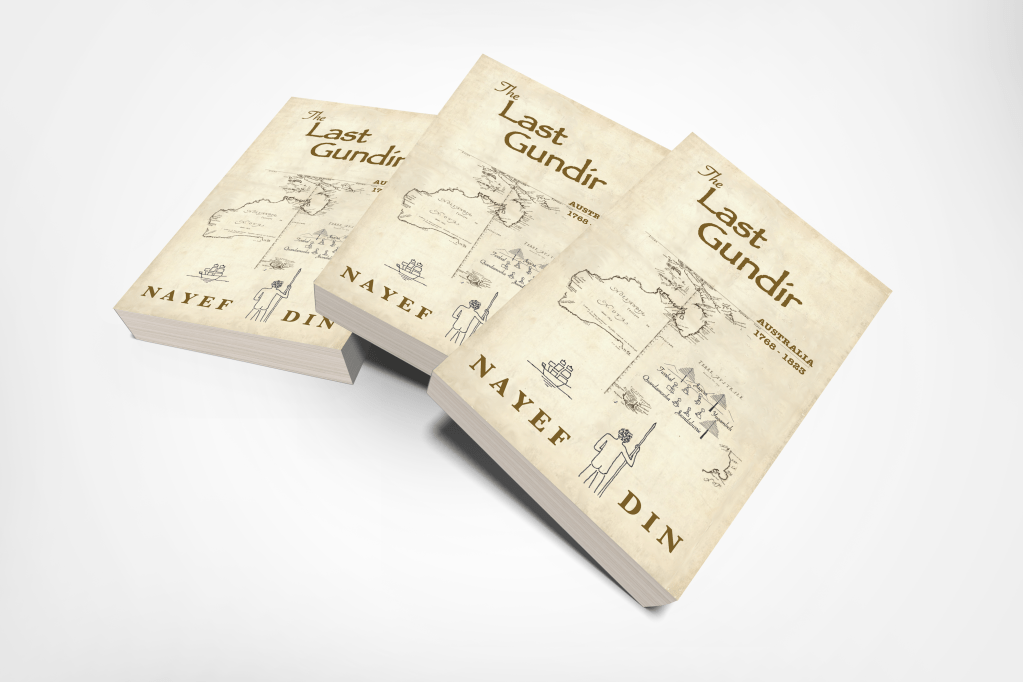
The National Library of Australia advised I could use the 1606 map of Australia as it was out of copyright by hundreds of years. I bought a bar code for the book. My friends in England (Matt and Geraldine) kindly proof-read the book. I prepared the maps. Aunty Maroochy and Raymond Evans (local historian) reviewed the novel. I did the editing and type-setting myself. I got a thousand copies printed and delivered to my address. I approached local bookshops. I obtained a stall at local markets and worked very hard to sell the books. By getting myself out there, I caught the attention of others in the community. As a result, I was featured in podcasts (available on Youtube if you search for my name or The Last Gundir). I had two interviews on 4ZZZ radio station (resulting in the books selling out in local bookshops within two days…no joke. People still listen to the radio!). My interview with the Noosa Paper was published. I was invited to give presentations at the Samford Historical Society and Samford Rotary Club who encouraged and sponsored me to get a Blue Card in order to talk in schools about the highly spiritual civilisation that I show in my novels. (I still have a valid Blue Card but sadly we never got around to organising it.) I have given many talks at Brisbane library branches over the years. I have received more than a hundred e-mails from readers who have enjoyed the novel enough to contact me. Some stated that it should be compulsory reading in schools in Australia as well as the UK (there’s no profanity or sex in the novels for that reason).
The Last Gundir went on to becoming the best-selling self-published book at Avidreader Bookshop, Riverbend Bookshop and Berkelouw Books. At book signing events at the latter, only Kevin Rudd outsold me with his memoir and I swear my novels are more interesting. Wrong Side is catching up and I hope the concluding novel of the trilogy takes off too.
All of this was possible because of that one moment that Aunty Maroochy intervened with that one text message. Her arms lifted me off the ground where I had fallen at the last hurdle. She set me straight and nudged me along. Her kindness touched me in ways I really cannot express.
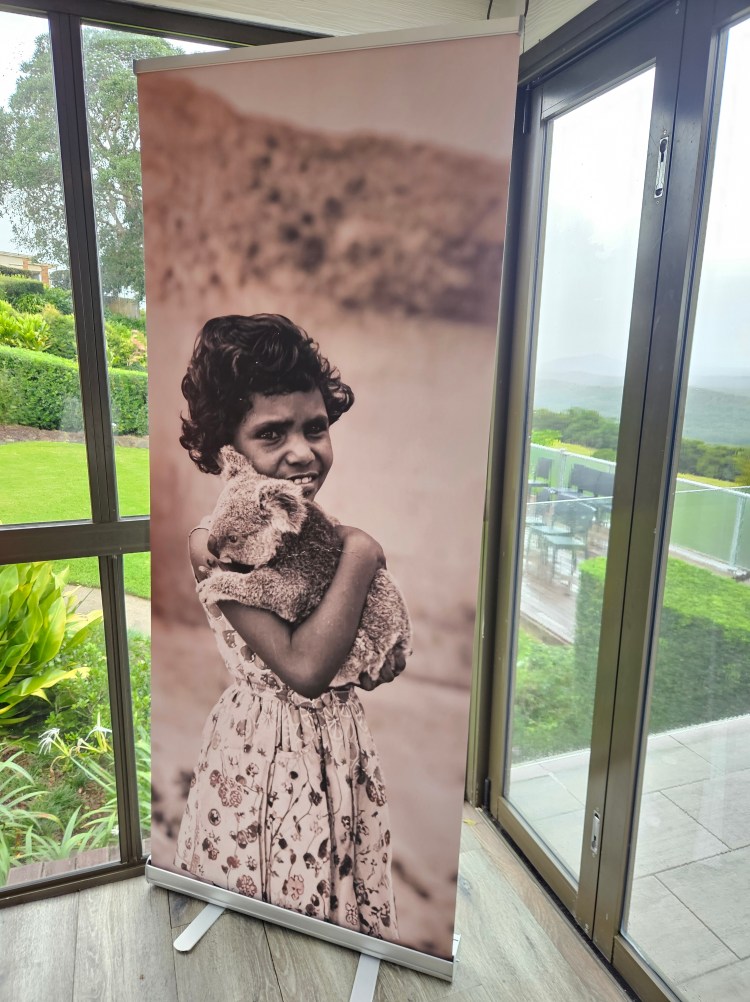
And now she’s gone. Forever. Just when I finished writing the third and final novel in the series. I keep asking God why couldn’t she have lived a little longer for she would have been so proud of me with novel 3 (likely title The Ghosts take Mianjin but tbc) which I will be dedicating to her. But in my culture, we believe that God has written down everyone’s departure date at birth and nobody is allowed even one second beyond it.
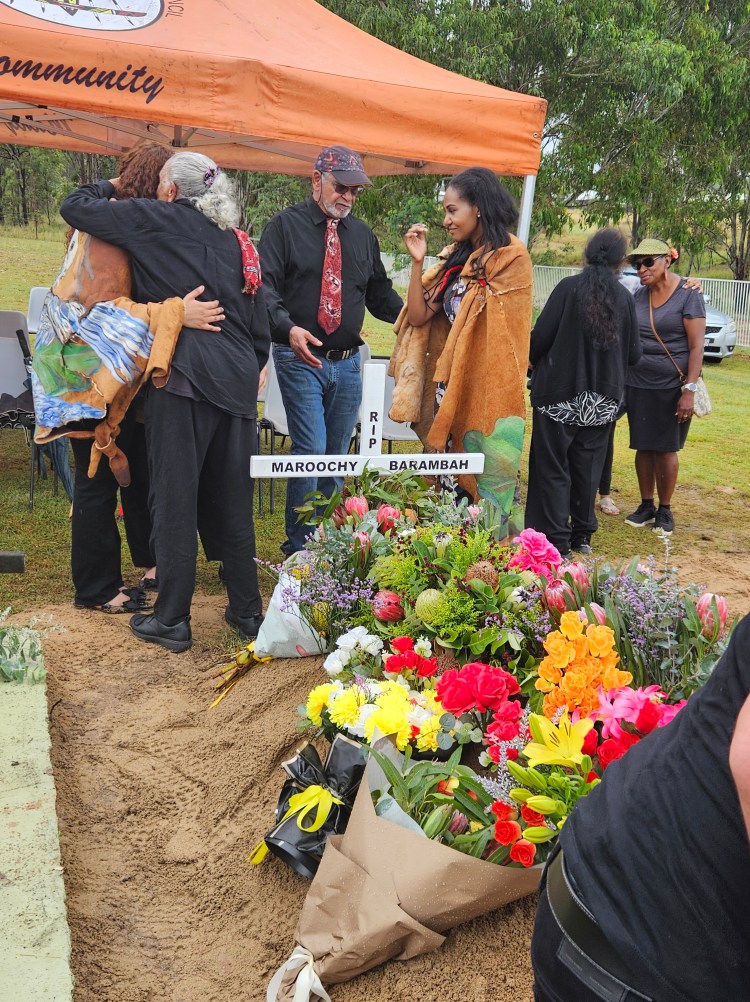
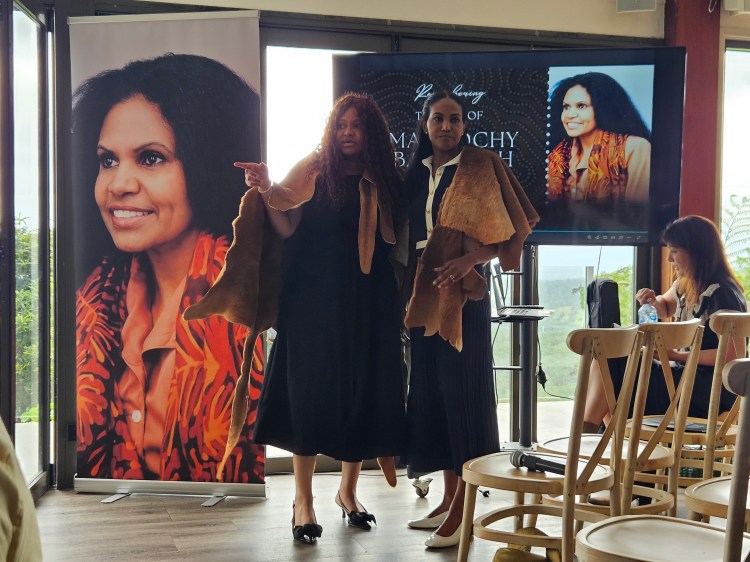
I attended her funeral service in Maleny and her burial at Cherbourg. With a handful of earth and tears in my eyes, I said goodbye to Aunty Maroochy Barambah. Law-Woman of the Turrbal people. Song-Woman of the Turrbal people. Trailblazer for the Indigenous community. My guide, friend and guardian angel. The lighthouse that ensured my journey on rocky seas was completed safely.
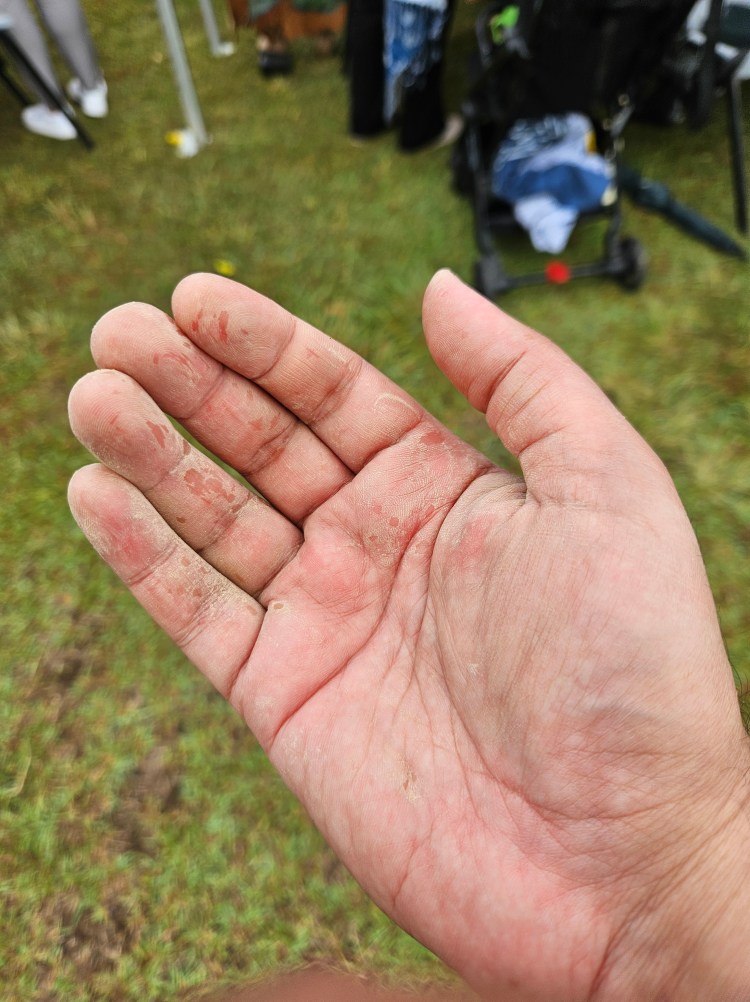
Her daughter’s words touched me at the service.
“You meant a lot to my mum, Nayef,” – Baringa Meeanjinu Barambah.
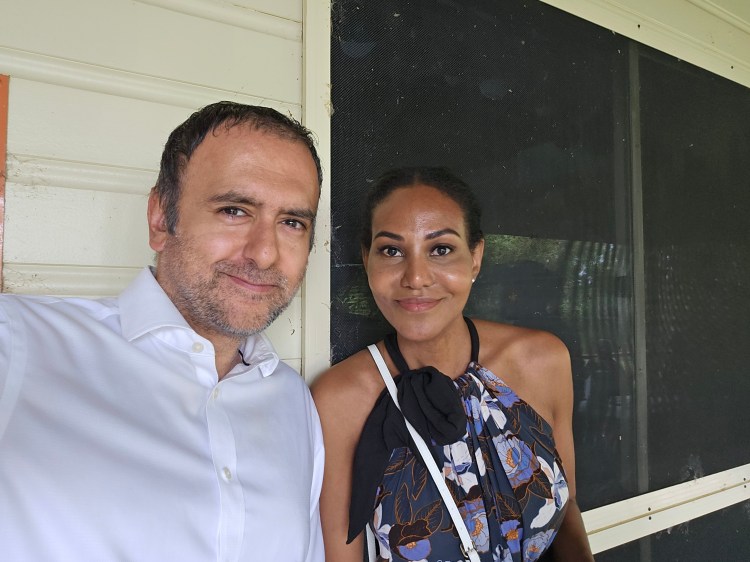
She meant a lot to me. May she rest in peace.
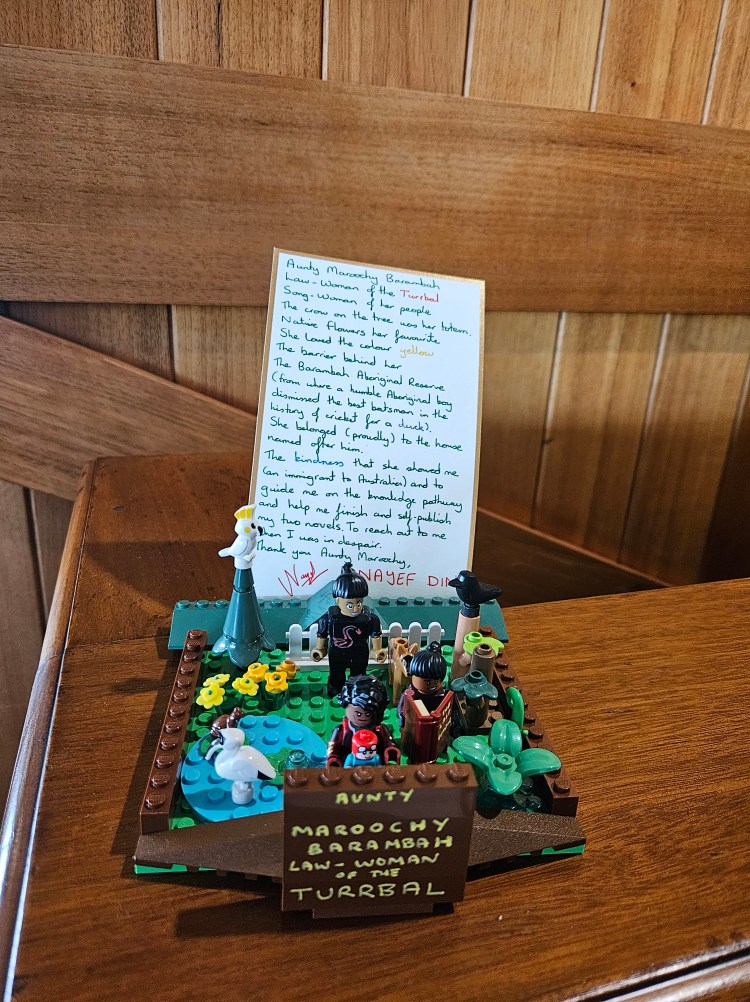
Her legacy lives on in Baringa and Kula as well as her grandson Dalapai. May God protect them all.
 Nayef Din