Ah referendum time. For Australians, this will be the 45th Referendum since Federation with the last one in 1999 attempting (unsuccessfully) to establish a Republic in place of a constitutional monarchy with a President replacing the Queen as Head of State. For us Brits, we had one in 2016 (which did carry) resulting in Brexit. If anyone expected the run up to that Referendum to be a calm civilised period of dignified decisive debate, I’ll let this photo do the talking.
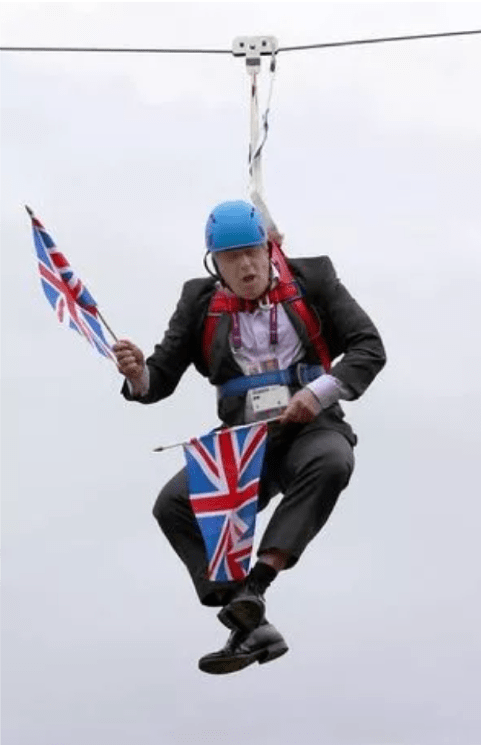
And yes, he really got stuck, shouting first for a ladder then a rope.
Anyways, here we are in 2023 with the Referendum date set as 14th October. What is being proposed?
“Do you approve of combining the Wallabies with the All Blacks to create One ANZAC rugby team for the World Cup to end England’s formidable dominance over the Wallabies (10 wins in last 11)?”
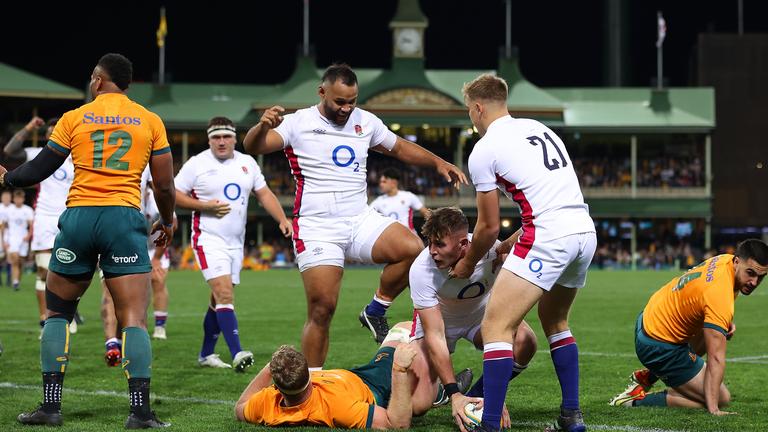
Apologies. Sometimes I can’t help myself (particularly on the eve of a World Cup which in truth England have no chance in. This could be the last time in a long while that I can rub it in).
Anyway, back to the Referendum. The actual question will be put to the population as to whether they approve of the following addition to the end of the Constitution:
In recognition of Aboriginal and Torres Strait Islander peoples as the First Peoples of Australia:
- there shall be a body, to be called the Aboriginal and Torres Strait Islander Voice;
- the Aboriginal and Torres Strait Islander Voice may make representations to the Parliament and the Executive Government of the Commonwealth on matters relating to Aboriginal and Torres Strait Islander peoples;
- the Parliament shall, subject to this Constitution, have power to make laws with respect to matters relating to the Aboriginal and Torres Strait Islander Voice, including its composition, functions, powers and procedures.
Speaking openly about this – a topic that I thought was a non-issue and would pass easily has ended up not only polarising the country but looking increasingly likely that the majority intend to vote No according to early polls.
As always, I like to examine these issues with a historical lens to provide some context.
The Voice is not a new concept.
It was established exactly 50 years ago. Yes, you read that right.
In the commentary of The Last Gundir novel (published well before the Referendum was announced), I actually show that the Voice had already been established.
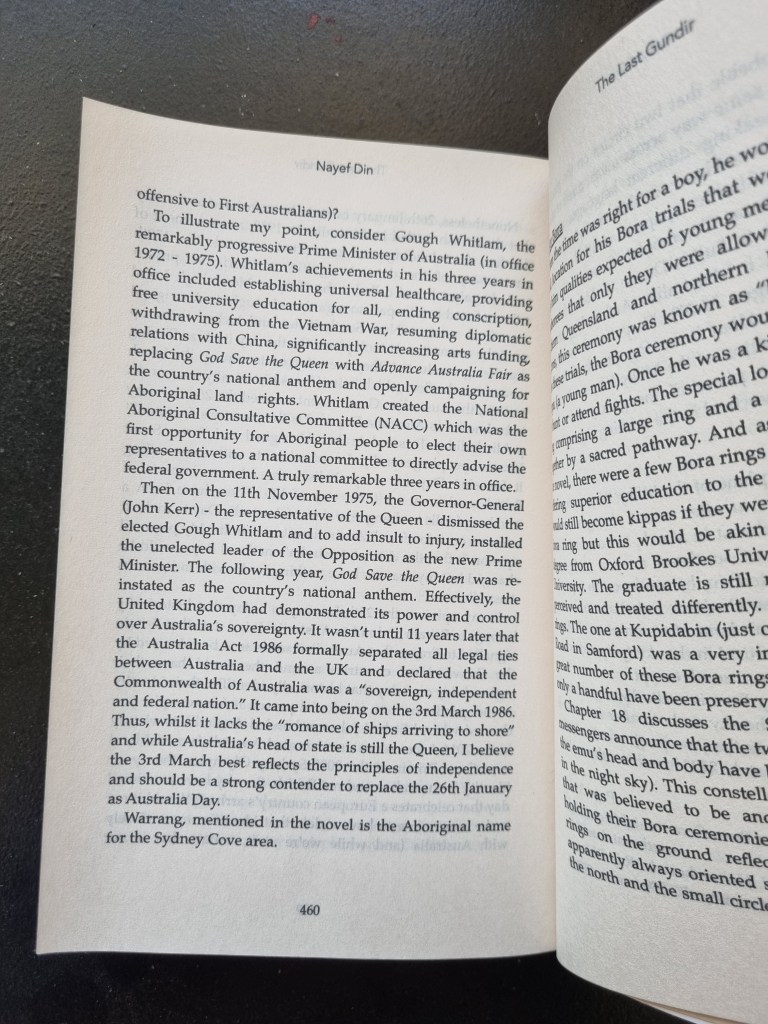
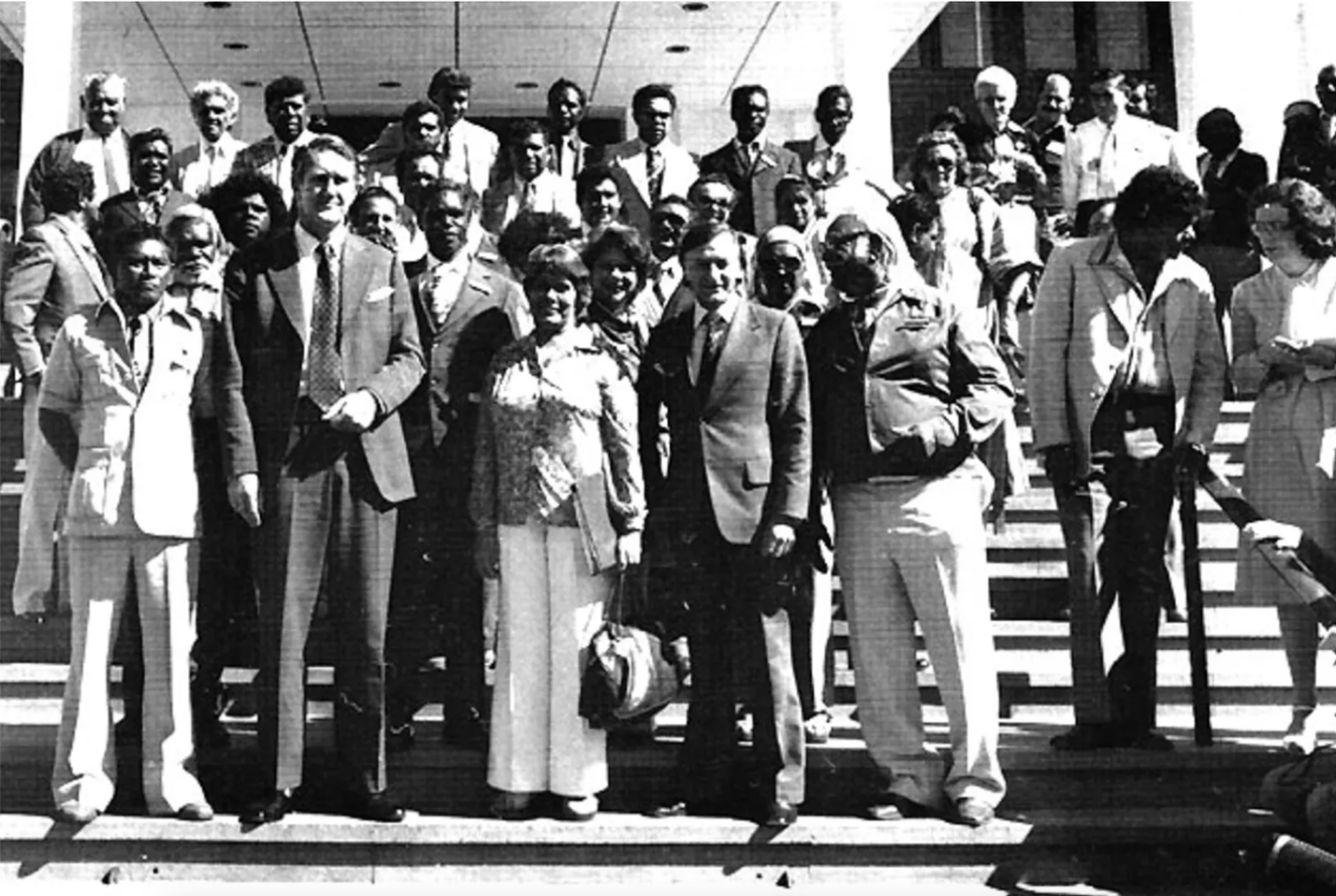
In 1973, the remarkably progressive Prime Minister Gough Whitlam established the National Aboriginal Consultative Committee (NACC). It was the first opportunity for Aboriginal people to elect their own representatives to a national committee to directly advise the Federal Government on issues of concern to Indigenous people. It was an advisory role and remained such even when it was restructured into the National Aboriginal Conference (NAC) in 1977 by the Fraser Government. There were frustrations within the Aboriginal communities that the NACC and subsequently the NAC did not do enough to further Indigenous interest. The NAC did push for a Treaty promoting the Yolngu word “makarrata” which meant “the end of a dispute between communities and the resumption of normal relations.” A subcommittee was established by the NAC to travel around the country and consult with Indigenous people on the makarrata.
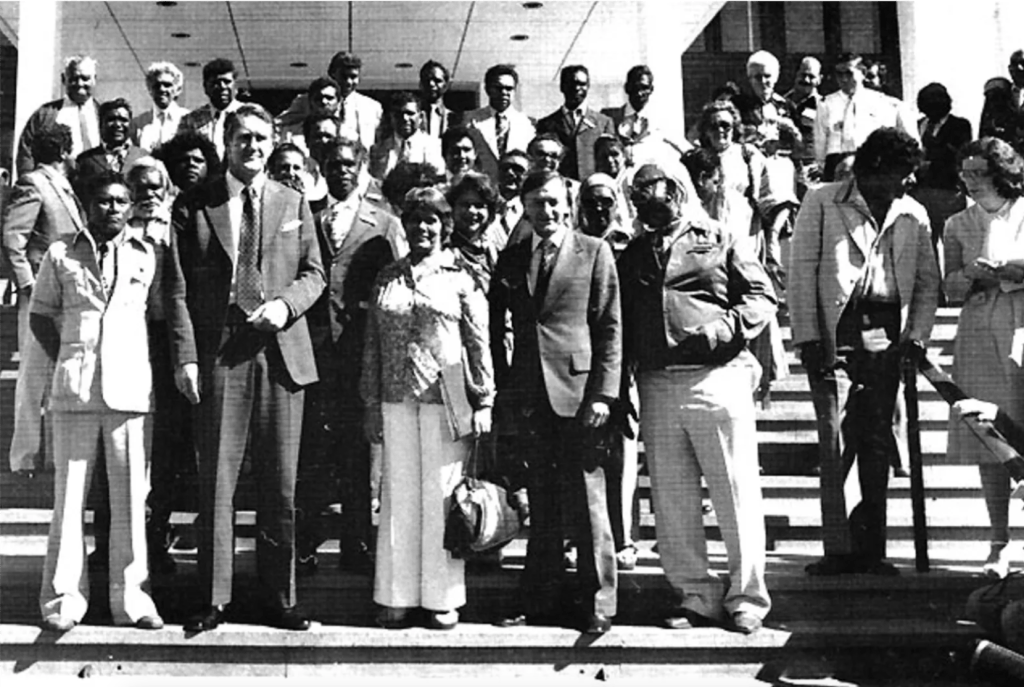
Relations between the NAC and the Federal Government deteriorated in the 1980s. Within the NAC, a divide in policy and strategy began to grow. One faction sought to transform the NAC towards a lobbying mechanism whereby it would strengthen ties with grass roots groups, understand their concerns and develop policy proposals in coordination with these groups. Another faction believed the NAC needed financial and personnel resources and that the body should continue the advisory position focusing more on interaction with government rather than with Aboriginal people themselves. This division effectively weakened the NAC and stalled any prospects of a reform. Financial mismanagement was also exposed. Frustrations led to resignations by key members of the NAC which sounded the imminent death knell. It was abolished in 1985 by the Hawke Government.
In 1990, the Hawke Government established the Aboriginal and Torres Strait Islander Commission (ATSIC) to give Indigenous people both an advisory role and a decision-making capacity albeit overseen by the Federal Government. One of its responsibilities was to provide loans and grants for small enterprises. In 2003, a review concluded that the ATSIC had not connected well with Indigenous Australians and did not serve them well. A separate body had already been established to focus more on Torres Strait Islander people living on the Torres Strait Islands. The review recommended reforms that would give greater control of the organisation to Indigenous people at a regional level. Instead, the ATSIC was abolished in 2004.
So the Executive Summary…
Labour set up the NACC. The Coalition abolished the NACC.
The Coalition set up the NAC. Labour abolished the NAC.
Labour set up ATSIC. The Coalition abolished the ATSIC (although with Labour’s blessing).
Whilst it is clear that the above Voices had all suffered from governance issues and arguably did not truly represent all Indigenous people, there is a line of thought suggesting that they were all abolished because of ideological opposition. With this 2023 Referendum, enshrining the Voice into the Constitution means that subsequent Governments would not be able to abolish the Voice on a whim. In a nutshell, that is what the Voice is about. It is not about “Native Title will take your house! Vote NO!!” which is what was printed on a pamphlet dropped in our letterboxes.
The sensational headline-grabbing propaganda from the No campaigners together with a lack of clear concise information from the Yes campaigners on the impact of the Voice for society cooks up a murky hotpot. Add ingredients of rising interest rates, high petrol prices, increasing utility bills, soaring rents and general anxiety about financial security and the dish is beginning to look like a No.
Until 1967, the, responsibility for Indigenous affairs rested solely with the different states. The Federal Government’s power was limited to the Northern Territory and the ACT. Australia voted to change that in the 1967 Referendum and was successful.
Will the 2023 Referendum allow Australia to Advance Fairly?
 Nayef Din